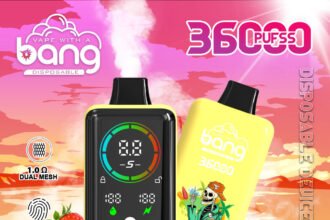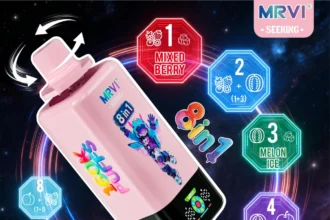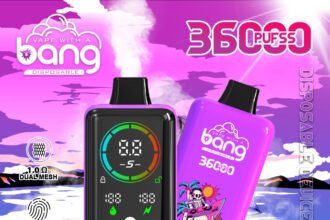



Walk into any vape shop in Europe and you’ll find an increasingly common sight: devices marketed as offering 10,000, 15,000, even 20,000 puffs. Yet European regulations supposedly cap disposable vapes at just 600 puffs. How do brands legally get around these restrictions—and what does it mean for consumers and regulators?
The EU TPD and Its 600 Puff Limit
The Tobacco Products Directive (TPD), formally Directive 2014/40/EU, serves as the cornerstone of European Union regulation for electronic cigarettes and vaping products. Adopted in 2014 and fully implemented by May 2016, the directive aims to balance public health protection with the smooth functioning of the internal market for tobacco alternatives.
The restriction that matters most for disposable vapes comes from Article 20(3), which mandates a maximum tank capacity of 2ml. This seemingly modest figure is the source of the infamous “600 puff limit.” Industry testing typically yields approximately 300 puffs per milliliter of e-liquid, meaning a compliant 2ml tank delivers roughly 600 puffs—hence the regulatory ceiling that has defined the European disposable vape market for nearly a decade.
Beyond tank capacity, the TPD also imposes additional constraints: a 10ml maximum bottle size for nicotine-containing e-liquids intended for refilling, and a 20mg/ml (2%) ceiling on nicotine concentration. Together, these requirements create a comprehensive framework that fundamentally shapes how disposable vaping products can be designed and marketed within EU member states.
Enter the JNR Alien 10K

The JNR Alien 10K exemplifies the category of devices that appear to flout these restrictions—at least on the surface. Marketed as delivering up to 10,000 puffs, this device boasts specifications that seem incompatible with TPD mandates: a 20ml e-liquid capacity (ten times the legal limit), an 850mAh rechargeable lithium battery with Type-C fast charging capability, a 1.2Ω mesh coil designed for consistent flavor delivery, and nicotine strength options spanning both 2% (20mg/ml) and 5% (50mg/ml) using nicotine salt formulations.
With roughly 50 flavor variants available, plus features like RGB LED lighting effects and an adjustable airflow system, the JNR Alien 10K clearly targets users seeking extended device longevity without the complexity of traditional vaping setups.
Here’s the problem: the JNR Alien 10K’s 20ml capacity directly violates the 2ml tank limit established under TPD Article 20(3). So how does such a device exist in the European market at all?
The answer isn’t straightforward. These products likely enter through grey market channels outside official distribution, or they simply bypass enforcement in markets where regulations are loosely applied. UK-based retailers are blunt in their consumer guidance—most devices marketed as “10,000 puff” disposables are “not TPD compliant and are sold illegally due to their large e-liquid capacity.”
Legal Workarounds: How Brands Stay Compliant
Not every manufacturer resorts to selling clearly non-compliant products. Several legitimate strategies have emerged that allow brands to offer higher puff counts while technically maintaining TPD compliance.
The Pre-Filled Pod System
The most common legal workaround involves pre-filled pod systems that exploit a regulatory loophole: the 2ml limit applies to the tank, not the total e-liquid available to the user. Devices like the Titan 10K Disposable Kit demonstrate this approach—they combine a pod system with eight pre-filled 2ml pods (totaling 16ml), delivering approximately 10,000 puffs while technically remaining compliant. The regulatory interpretation treats each pod as a separate “tank” rather than the device’s total capacity.
Rechargeable Device Classification
A second legal pathway hinges on the distinction between “disposable” and “rechargeable” devices. Under this interpretation, products featuring rechargeable batteries with replaceable or refillable pods may qualify as “pod kits” rather than single-use disposables, potentially allowing different regulatory treatment. Examples include the IVG Smart Max 10K Kit, Vozol Vista Plug 10k, and Crystal Prime Aura Bar 10K Pod Kit—all marketed as pod kits rather than disposables.
Closed Pod Systems
Some manufacturers have developed closed pod systems combining rechargeable batteries with pre-filled, non-refillable 2ml pods. This approach maximizes compliance arguments while extending device life through battery recharging, though total e-liquid consumption remains limited by the 2ml-per-pod constraint.

Regulatory Developments and the Road Ahead
The regulatory landscape continues to shift beneath industry participants’ feet. The United Kingdom implemented a comprehensive ban on single-use disposable vapes effective June 1, 2025, representing the most significant market restriction since the TPD’s original implementation. France has followed with similar prohibitions, reflecting a broader European movement toward restricting single-use nicotine products.
Looking forward, the European Union is preparing for TPD3—a comprehensive revision expected by Q2 2026 that could introduce flavor restrictions, enhanced packaging requirements, new environmental provisions, further advertising constraints, and first-time EU-level regulation of nicotine pouches.

A significant concern shadows these regulatory efforts: the proliferation of illegal disposable vapes throughout Europe. Research published in 2026 by the Fraunhofer Institute revealed that non-compliant devices with e-liquid capacities far exceeding legal limits are flooding European markets, undermining regulatory objectives and fueling youth vaping while simultaneously costing governments substantial tax revenue.
The tension between regulatory limits and market demand shows no signs of easing. As the industry adapts to new restrictions and manufacturers continue developing creative compliance strategies, consumers, businesses, and regulators all face a rapidly evolving landscape where the distinction between legal and illegal products increasingly blurs.